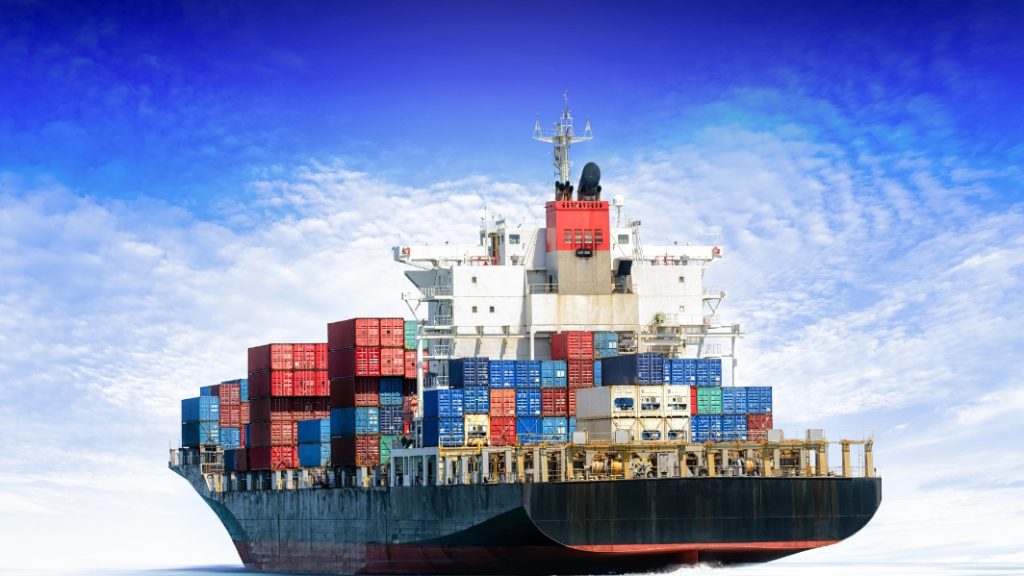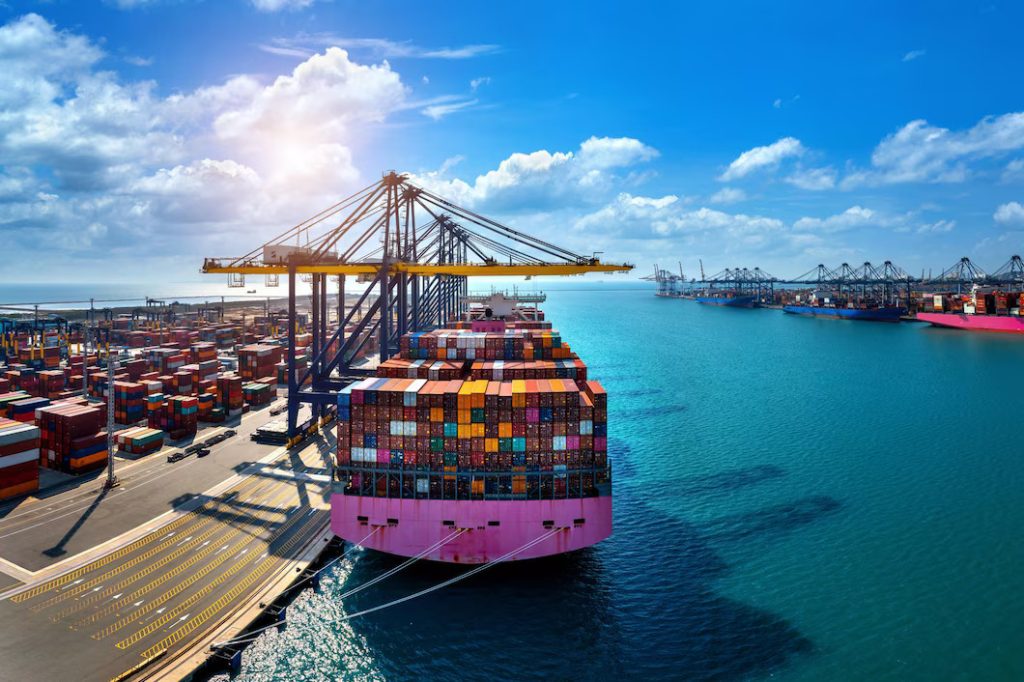
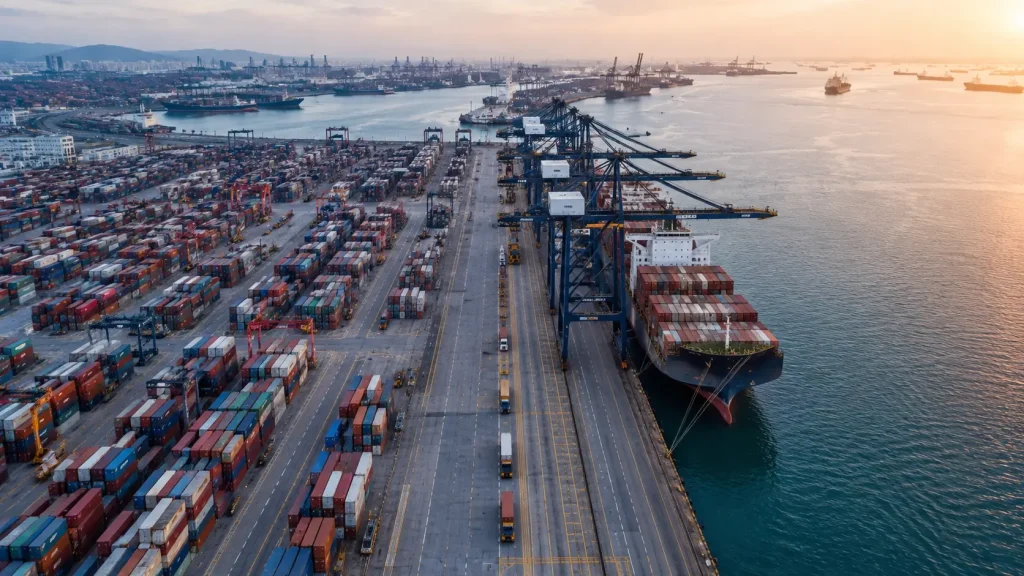
If your sea freight shipment has arrived later than expected this year, you’re not alone. Port congestion has become one of the defining challenges of global shipping in 2026, with delays building up at several major hubs and rippling through supply chains far beyond the ports themselves.
For businesses relying on predictable delivery windows, this isn’t just an inconvenience. It affects inventory planning, customer promises, and cash flow. Here’s what’s actually causing the congestion, and more importantly, what businesses can do to protect their shipments from it.
Why Port Congestion Is Happening in 2026
Port delays rarely come down to one single cause. This year, a few factors are combining to slow things down at once.
Uneven global demand. Shipping volumes haven’t grown dramatically, but they’ve become harder to predict, which makes it difficult for ports to plan capacity efficiently.
Berth and terminal bottlenecks. Several major Asian ports, including hubs in the Philippines, Singapore, and China, have reported multi-day berth waits this year as vessel arrivals bunch up rather than arriving evenly spaced.
Landside infrastructure lagging behind. Even where waterside operations have improved, trucking, rail, and warehousing capacity on land hasn’t always kept pace, creating backlogs after ships have already docked.
Rerouted trade lanes. Ongoing geopolitical disruptions have pushed some shipping routes to take longer paths, adding both transit time and unpredictability to arrival schedules.
Carrier capacity management. Shipping lines have been using tactics like blank sailings (cancelling scheduled voyages) to manage rates and capacity, which can create sudden gaps in service on certain routes.
The result is a shipping environment where delays aren’t isolated incidents. They’re becoming a normal part of planning, at least for now.
Who Feels the Impact Most
Port congestion doesn’t hit every business the same way. It tends to hurt most when:
- Inventory is planned tightly around expected delivery dates
- Products are perishable or time-sensitive
- A single supplier or shipping lane is relied on exclusively
- There’s no backup plan if a shipment misses its window
SMEs are often hit hardest, since they generally have less buffer stock and fewer alternative suppliers to fall back on compared to larger businesses.
How Businesses Can Protect Shipments from Delays
1. Build in Buffer Time, Not Just Buffer Stock
Rather than assuming standard transit times will hold, factor in extra days for congestion-prone routes, especially through busier Asian ports. This is particularly important for businesses that operate on tight restocking cycles.
2. Diversify Shipping Methods
Relying entirely on sea freight leaves you exposed when ports slow down. Splitting shipments between sea freight services for bulk, non-urgent stock and air freight for smaller, time-critical restocks gives businesses a way to keep moving even when one method is delayed.
3. Track Shipments in Real Time
Knowing a shipment is delayed early gives you time to adjust customer expectations or reroute other orders, instead of finding out only when a delivery date has already passed. Our guide to real-time courier tracking covers how businesses are using visibility tools to stay ahead of exactly this kind of disruption.
4. Work With a Freight Forwarder, Not Just a Carrier
A freight forwarder manages routing, documentation, and alternative options when a shipment hits delays, rather than simply handing off cargo and hoping for the best. If you’re unfamiliar with how this differs from booking freight directly, our explainer on what freight forwarding actually involves breaks down the difference.
5. Avoid Over-Committing to a Single Port or Route
Where possible, working with a logistics partner who can route shipments through alternative ports reduces the risk of being stuck behind one congested hub with no other option.
6. Reconsider Shipment Sizing
For businesses shipping smaller volumes, options like LCL (less-than-container-load) shipping can offer more flexibility than waiting to fill a full container, especially when congestion is making full-container schedules less predictable. We cover this in more detail in our guide to LCL shipping.
What This Means for Businesses Going Forward
Port congestion in 2026 isn’t necessarily a short-term blip. Structural factors like uneven landside infrastructure, rerouted trade lanes, and shifting demand patterns suggest delays will keep surfacing at different ports throughout the year, even as conditions ease in some areas and tighten in others.
The businesses that handle this well aren’t the ones hoping congestion won’t affect them. They’re the ones building flexibility into how they ship, so a delay at one port doesn’t mean a delay to their entire operation.
The Bottom Line
Port delays are becoming a normal part of the shipping landscape, not a rare disruption. Businesses that build in buffer time, diversify shipping methods, and work with a logistics partner who actively manages routing and visibility are far better positioned to absorb these delays without passing them on to customers.
If congestion has been affecting your shipments, it’s worth reviewing whether your current shipping setup gives you enough flexibility to adapt. Postkodes manages both air freight and sea freight services with full tracking and customs support, helping businesses respond to delays before they become bigger problems.
FAQs
Why are ports experiencing so much congestion in 2026?
A combination of uneven demand, berth bottlenecks at major Asian ports, landside infrastructure lagging behind waterside operations, and rerouted trade lanes are all contributing to slower, less predictable port turnaround times this year.
How can SMEs protect themselves from port delays?
Building in buffer time, using a mix of air and sea freight, tracking shipments in real time, and working with a freight forwarder who can adjust routing are all practical ways SMEs can reduce their exposure to congestion.
Is air freight a good backup when sea freight is delayed?
For smaller or time-sensitive shipments, yes. Air freight can help businesses avoid stockouts while sea freight shipments are delayed, though it typically costs more per kilogram.
Does Postkodes help businesses avoid or manage port delays?
Yes. Postkodes provides real-time tracking, flexible routing across air and sea freight, and full customs support, helping businesses stay ahead of disruptions rather than reacting to them after the fact.