If your sea freight shipment has landed at port but still hasn’t reached you, the delay might not be happening on the water at all. It could be sitting at the port itself, waiting to move. This waiting period has a name in the shipping industry: container dwell time, and it’s one of the most overlooked causes of delayed deliveries.
Understanding what dwell time actually is, why it happens, and how it affects your shipment can help you plan better and avoid unnecessary surprises.
What Is Container Dwell Time?
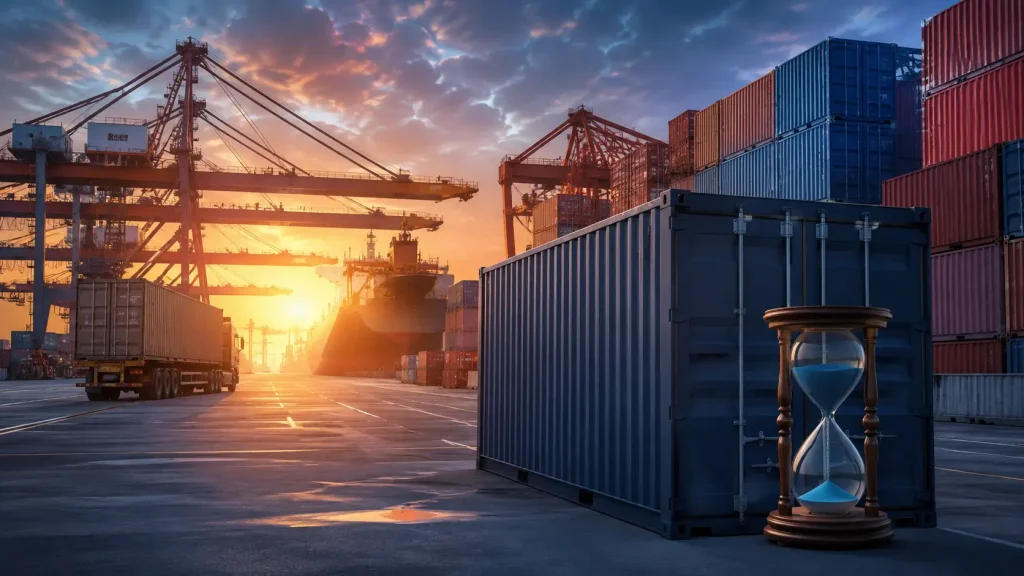
Container dwell time is the amount of time a container spends sitting at a port terminal between two key moments, either from when it’s unloaded off a ship until it’s picked up for onward transport, or from when it arrives at the terminal for export until it’s actually loaded onto a vessel.
In simple terms, it’s the gap between a container arriving somewhere and actually leaving again. The longer that gap, the longer your shipment sits idle, even though it has technically “arrived.”
Why Container Dwell Time Happens
Dwell time isn’t usually caused by one single issue. It tends to build up from a mix of factors happening at once.
Customs clearance delays. If documentation isn’t complete or accurate, customs authorities can hold a container until everything checks out, adding days to the process.
Limited trucking or rail capacity. Even after a container is cleared, it still needs transport to leave the terminal. If trucks or rail slots aren’t available, containers simply wait their turn.
Port congestion and yard space. When terminals are operating near capacity, containers can sit longer simply because there’s limited space and equipment to move them efficiently.
Consignee delays. Sometimes the delay isn’t the port’s fault at all. If the receiving business isn’t ready to accept the container or hasn’t arranged pickup in time, dwell time increases regardless of how efficient the port is.
Peak season demand. During periods of high shipping volume, terminals handle more containers than usual, which naturally slows down how quickly each one moves through.
Why Dwell Time Matters More Than People Realize
Many businesses assume that once a shipment “arrives” at port, delivery is imminent. Dwell time is why that assumption often doesn’t hold up.
A few reasons this matters:
- It adds real time to your delivery timeline, separate from ocean transit time.
- It can trigger extra fees. Ports often charge demurrage (fees for containers left at the terminal too long) once a free period expires.
- It’s harder to predict than transit time. Ocean transit is relatively consistent. Dwell time depends on congestion, documentation, and local capacity, all of which can shift quickly.
- It compounds during disruption. When ports are already congested, dwell time tends to increase further, since terminals are handling more containers with the same amount of space and equipment.
For businesses working with tight restocking schedules, dwell time is often the hidden reason a shipment feels late even though the ocean portion of the journey went smoothly.
How to Reduce the Impact of Container Dwell Time
1. Get Documentation Right the First Time
Incomplete or incorrect paperwork is one of the most common causes of customs-related dwell time. Having accurate commercial invoices and packing lists ready in advance reduces the chance of a container being held up unnecessarily.
2. Arrange Pickup Before the Container Arrives
Waiting until a container lands to start arranging trucking or warehousing adds avoidable delay. Coordinating pickup logistics ahead of arrival keeps containers moving instead of sitting idle.
3. Track Your Shipment Closely Once It Reaches Port
Ocean transit is easy to track, but the dwell period is where visibility often drops off. Staying on top of container status once it lands lets you react quickly instead of finding out about a delay after fees have already started accumulating.
4. Work With a Freight Forwarder Who Manages the Full Journey
A freight forwarder that handles documentation, customs clearance, and onward transport as one connected process reduces the handoff points where dwell time tends to build up. Managing each piece separately usually means more waiting between steps. Our guide on what freight forwarding actually involves covers this in more detail.
5. Build Dwell Time Into Your Planning
Rather than assuming delivery will happen immediately after a vessel docks, factoring in a realistic buffer for dwell time, especially during periods of known port congestion, helps avoid missed deadlines and last-minute scrambling.
The Bigger Picture
Container dwell time is one of several factors contributing to the wider pattern of shipping delays businesses have been dealing with recently. It sits alongside broader challenges like port congestion and berth waits, all of which point to the same conclusion: sea freight delivery estimates need to account for more than just time on the water.
The Bottom Line
If your sea freight shipment seems delayed even after reaching port, container dwell time is often the reason. It’s shaped by customs processing, transport availability, and terminal capacity, and it’s rarely visible until it’s already affecting your delivery timeline. Working with a logistics partner who manages documentation, customs, and onward transport as one process, rather than separate handoffs, is one of the most effective ways to reduce its impact.
Postkodes manages the full journey for sea freight services, from booking and documentation through customs clearance and onward delivery, helping reduce the delays that often build up once a shipment reaches port.
FAQs
What is a normal container dwell time?
It varies by port and region, but a few days is common under normal conditions. During periods of congestion, dwell time can extend significantly longer.
Does container dwell time cost extra money?
Yes, often through demurrage fees, which are charged once a container stays at the terminal beyond its free allotted time.
How is dwell time different from transit time?
Transit time is how long a shipment spends moving, whether by ship, truck, or rail. Dwell time is how long it sits still at a terminal between those movements.
Can working with a freight forwarder reduce dwell time?
Yes. A freight forwarder who manages documentation, customs, and pickup coordination together can reduce the delays that build up when each step is handled separately.