
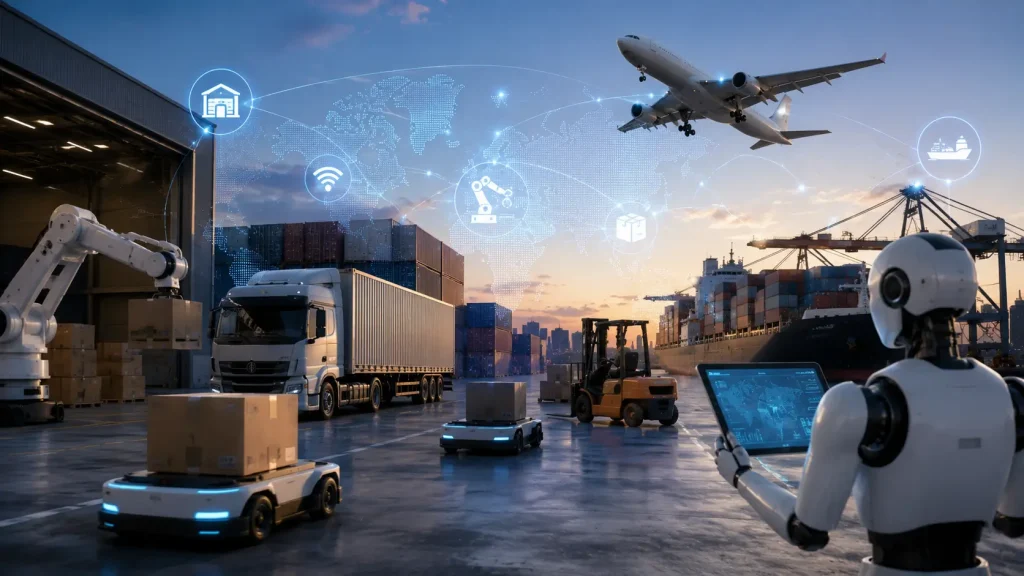
For years, cross-border logistics ran on manual processes: phone calls to confirm shipment status, spreadsheets to track inventory, and paperwork that moved slower than the goods themselves. That’s changing fast. In 2026, AI and automation aren’t just buzzwords in logistics conversations anymore. They’re becoming the infrastructure that makes reliable, transparent international shipping possible at scale.
For businesses shipping across borders, understanding how these tools are actually being used, not just talked about, matters more than ever.
Why Logistics Needed This Shift
Cross-border shipping has always involved more moving parts than domestic delivery: customs documentation, multiple carriers, currency differences, and unpredictable transit times. For a long time, the industry managed this complexity through people manually checking, updating, and chasing information.
The problem is that manual processes don’t scale well. As shipment volumes grow, so does the room for errors, delays, and lost visibility. AI and automation are being adopted specifically to close that gap, not by replacing logistics expertise, but by handling the repetitive, error-prone parts of the process so people can focus on the parts that actually need judgment.
Where AI and Automation Are Making the Biggest Difference
1. Real-Time Shipment Tracking
Automated tracking systems now update shipment status continuously, rather than relying on manual check-ins at each stage. This gives businesses and customers visibility into exactly where a shipment is, without needing to call or email for updates. We’ve covered how this shift is playing out in more detail in our guide to real-time courier tracking.
2. Automated Notifications
Instead of customers wondering whether their shipment has cleared customs or left a warehouse, automated systems now send updates the moment a status changes. This is a small shift with a big impact on customer trust, since people no longer have to chase information that logistics providers already have. Postkodes’ own move toward automatic WhatsApp shipment notifications is a direct example of this in practice.
3. Smarter Routing and Documentation Workflows
AI-assisted systems can flag incomplete or inconsistent documentation before it causes a customs delay, rather than after a shipment gets held up. Similarly, automated routing tools can adjust to congestion or capacity issues in ways that would take a person much longer to identify manually.
4. Predictive Delay Detection
Rather than waiting for a shipment to actually be late, some systems can now flag a higher likelihood of delay based on patterns like port congestion, weather, or carrier capacity, giving businesses a chance to adjust plans before a delay actually happens.
5. API-Driven Integration for E-commerce and SMEs
Automation isn’t just internal to logistics providers. It’s increasingly built into the tools businesses use directly. API integrations now let e-commerce platforms and SMEs plug shipping, tracking, and customs processes straight into their own systems, removing manual data entry entirely. This is central to how platforms are managing growth, something we explore further in our piece on how Postkodes helps e-commerce platforms scale cross-border fulfillment.
What This Means for Businesses Shipping Internationally
The practical impact of AI and automation isn’t abstract. It shows up in a few concrete ways:
- Fewer delays caused by paperwork errors, since issues get flagged earlier in the process
- Less time spent chasing shipment updates, freeing up staff for higher-value work
- More predictable delivery timelines, even across complex, multi-country routes
- Lower operational costs, since fewer resources go toward manual tracking and status checking
For SMEs in particular, this matters because automation gives smaller businesses access to the kind of visibility and efficiency that used to require a dedicated logistics team.
Automation Doesn’t Replace the Human Side of Logistics
It’s worth being clear about what AI and automation are actually doing here. They’re not replacing customs expertise, carrier relationships, or the judgment needed when something genuinely unexpected happens. What they’re doing is removing the repetitive manual work, so that human attention goes toward the situations that actually need it, like resolving a customs hold or rerouting a shipment during a disruption.
This is why the logistics providers seeing the most benefit from AI and automation are the ones combining it with real operational infrastructure. Technology can flag a problem faster, but it still takes people and physical logistics capability to actually solve it.
Where This Is Headed
As cross-border trade continues to grow, especially across Africa’s expanding e-commerce and SME sectors, the providers that combine automation with reliable physical logistics are likely to pull ahead of those relying on one or the other alone. Businesses shipping internationally should expect automated tracking, notifications, and documentation checks to become standard, not a premium feature, over the next few years.
The Bottom Line
AI and automation are reshaping cross-border logistics in 2026, not by replacing the people who make shipping work, but by removing the manual friction that used to slow everything down. Real-time tracking, automated notifications, smarter documentation checks, and API integrations are turning what used to be a black box into a process businesses can actually see and plan around.
Postkodes combines this kind of technology with real air and sea logistics infrastructure, helping businesses get the visibility of a modern platform without losing the reliability of an operator that actually moves the shipment. To see how this is playing out in practice, take a look at how Postkodes is introducing AI-driven logistics to redefine customer experience.
FAQs
Is AI replacing logistics jobs in cross-border shipping?
Not entirely. AI and automation mostly handle repetitive tasks like tracking updates and documentation checks, while people remain essential for resolving customs issues, carrier relationships, and unexpected disruptions.
How does automation reduce customs delays?
Automated systems can flag incomplete or inconsistent documentation before a shipment reaches customs, reducing the chance of it being held up due to paperwork errors.
Can small businesses benefit from AI-driven logistics tools?
Yes. API integrations and automated tracking give SMEs access to visibility and efficiency that previously required a dedicated logistics team, helping them compete with larger businesses.
Does Postkodes use AI and automation in its logistics services?
Yes. Postkodes combines automated tracking, notifications, and API integrations with physical air and sea freight operations to give businesses both visibility and reliable delivery.