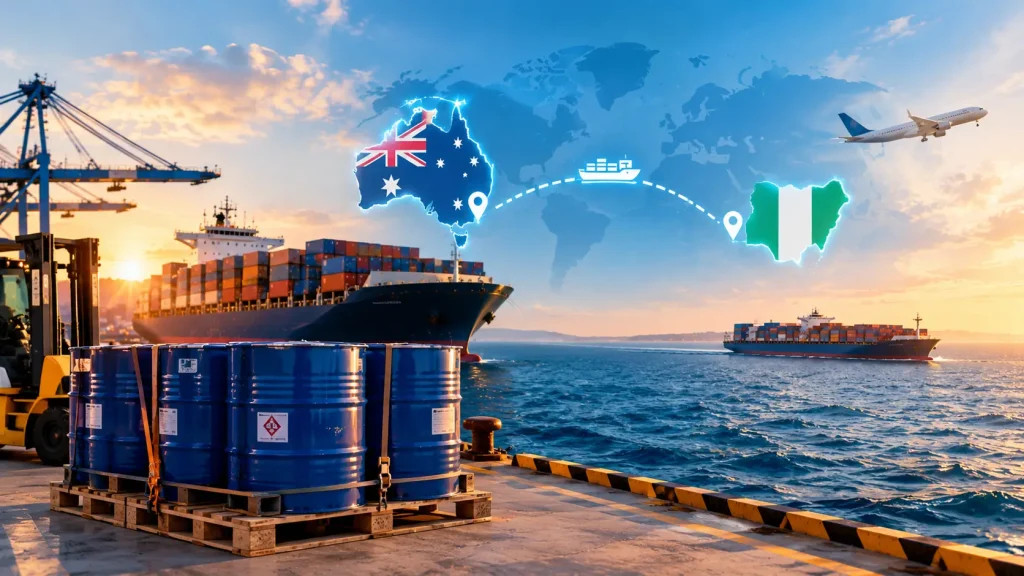

Businesses around the world are rethinking where they source from and how they move goods. Tariffs, export controls, and regional instability have pushed many companies away from relying on a single country or trade lane, and toward more diversified, resilient supply chain networks. This shift, often called supply chain redesign, is one of the defining stories of global trade in 2026.
For African trade corridors, this redesign isn’t just background noise. It’s an opportunity that’s already reshaping how goods move into, out of, and across the continent.
What Supply Chain Redesign Actually Means
Supply chain redesign refers to businesses restructuring where they source materials, manufacture products, and route shipments, usually in response to rising costs, tariff exposure, or geopolitical risk tied to a single region. Rather than concentrating trade through one dominant corridor, companies are spreading sourcing and distribution across multiple regions to reduce risk.
This isn’t a temporary adjustment. Trade professionals increasingly view current tariff policies as a lasting shift in how global trade works, not a short-term negotiating tactic, which means the businesses redesigning their supply chains now are planning for the long term, not just riding out a rough year.
Why This Matters for Africa
Africa has historically been underrepresented in global supply chain planning, often treated as a secondary market rather than a core sourcing or distribution region. Supply chain redesign is starting to change that, for a few clear reasons.
Diversification favors underused regions. As businesses move away from single-country dependency, particularly reducing reliance on any one dominant manufacturing hub, regions with existing trade infrastructure and growth potential become more attractive. Africa’s expanding logistics capacity positions it to capture some of this shift.
Rising tariffs make alternative sourcing more competitive. When tariffs on goods from certain countries increase significantly, sourcing from regions with more favorable trade terms becomes financially attractive, even accounting for added logistics complexity.
Intra-African trade is strengthening independently. Separate from global tariff pressures, agreements like the African Continental Free Trade Area are actively reducing barriers to trade between African nations, making intra-continental corridors more viable for businesses building redundancy into their supply chains.
E-commerce growth is accelerating regional demand. As global e-commerce penetration continues to climb, businesses that once focused narrowly on a single major market are expanding cross-border fulfillment into new regions, and Africa’s fast-growing e-commerce sector is increasingly part of that expansion.
What This Looks Like in Practice
Supply chain redesign in the African context is showing up in a few concrete ways:
- Businesses adding African suppliers or manufacturing partners to reduce dependency on regions facing tariff volatility
- Increased investment in intra-African trade corridors, particularly between West African nations with growing trade agreements
- Logistics providers expanding physical infrastructure across multiple African countries rather than operating through a single hub
- SMEs diversifying import sources to avoid being fully exposed to tariff changes affecting one specific country of origin
This is a shift from treating Africa as a single distant market to treating it as a network of interconnected trade corridors, each with its own logistics needs and growth potential.
The Logistics Challenge Behind the Opportunity
Redesigning supply chains toward African trade corridors isn’t automatic. It requires logistics infrastructure that can actually support it, including reliable customs processes, consistent transit times, and visibility across multiple countries rather than a single port or hub.
This is where the gap between opportunity and execution often shows up. Businesses want to diversify into African markets, but without dependable freight options and customs support, the added complexity can outweigh the benefits of diversification in the first place.
Postkodes has been building toward exactly this kind of infrastructure, expanding operational hubs across Australia, Ghana, Nigeria, and Senegal to support the kind of multi-corridor trade that supply chain redesign requires. If you’re exploring how businesses are approaching this shift more broadly, our piece on how Postkodes is powering intra-African trade through seamless logistics looks at what that looks like in practice.
What Businesses Should Consider
For businesses evaluating whether to redesign parts of their supply chain toward African trade corridors, a few questions are worth asking early:
- Which African markets align with your existing trade lanes? Starting with corridors that already have logistics infrastructure reduces early complexity.
- Does your logistics partner operate across multiple countries, or just one? A single-country presence limits flexibility if you need to diversify further down the line.
- How will customs and documentation be handled across different regions? Inconsistent customs processes are one of the most common reasons diversification efforts stall.
- Are you factoring in tariff exposure on your current sourcing, not just shipping costs? Our breakdown of how tariffs and trade policy shifts are affecting shipping costs covers this in more detail.
The Bottom Line
Supply chain redesign in 2026 isn’t just a response to tariffs. It’s a broader reassessment of where global trade can be more resilient, and African trade corridors are increasingly part of that conversation. For businesses ready to diversify sourcing or distribution into the region, the opportunity depends heavily on having logistics infrastructure that can actually support multi-country trade, not just a single shipping lane.
Postkodes operates across Australia, Ghana, Nigeria, and Senegal, with the freight, customs, and tracking infrastructure needed to support businesses redesigning their supply chains toward African markets. Explore our sea freight services and air freight services to see how we support cross-border trade across the continent.
FAQs
What is driving supply chain redesign in 2026?
Rising tariffs, geopolitical volatility, and a shift toward long-term risk diversification are pushing businesses to reduce dependency on single-country sourcing and distribution.
Why are African trade corridors becoming more attractive to global businesses?
Growing intra-African trade agreements, expanding logistics infrastructure, and rising e-commerce demand are making African markets a more viable part of diversified supply chain strategies.
What logistics challenges come with diversifying into African markets?
Inconsistent customs processes, limited multi-country logistics infrastructure, and unpredictable transit times are common barriers, which is why working with a logistics partner operating across multiple African hubs matters.
Does Postkodes support businesses looking to diversify supply chains into Africa?
Yes. Postkodes operates hubs across Australia, Ghana, Nigeria, and Senegal, providing freight, customs, and tracking infrastructure to support cross-border and intra-African trade.