
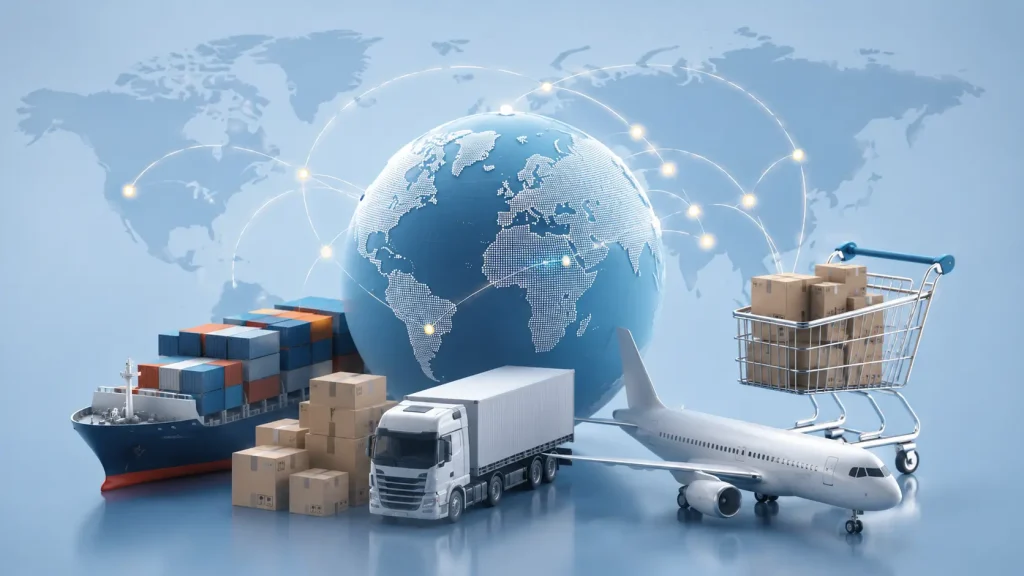
E-commerce platforms expanding into Africa and other emerging markets hit the same wall eventually: growth outpaces logistics. Orders increase, but shipping delays, customs bottlenecks, and unreliable tracking start costing more than they should — in refunds, bad reviews, and customers who simply stop coming back.
The problem usually isn’t demand. It’s fulfillment infrastructure that wasn’t built to scale across borders in the first place.
This is where Postkodes fits in. Instead of stitching together couriers, customs brokers, and warehousing separately, e-commerce platforms get one logistics partner that handles the entire cross-border journey — from pickup to doorstep.
Why Cross-Border Fulfillment Is Harder Than It Looks
Domestic fulfillment is relatively predictable. Cross-border fulfillment introduces variables most e-commerce platforms aren’t equipped to manage in-house:
- Customs documentation that varies by country and product category
- Unpredictable transit times, especially without a dedicated logistics partner managing routing
- Limited visibility, leaving sellers and customers guessing where a shipment actually is
- Duties and taxes that, if miscalculated, delay clearance or surprise the customer at delivery
- Inconsistent last-mile delivery once goods land in the destination country
Individually, none of these are impossible to solve. But solving all of them at once, at scale, without a dedicated logistics partner, is where most platforms fall behind.
How Postkodes Solves This
1. A Single Partner for Both Air and Sea Freight
Different order types need different shipping methods. Fast-moving, high-value inventory often needs speed; bulk restocking doesn’t need to be rushed and shouldn’t cost like it is. Postkodes gives e-commerce platforms access to both Air Freight Services and Sea Freight Services under one account, so platforms can match shipping method to order urgency instead of defaulting to a single, often overpriced, option. If you’re weighing the two up for a specific shipment, our breakdown of sea freight vs air freight costs covers how to decide. For sellers restocking smaller volumes, LCL shipping is also worth understanding as a cost-conscious middle ground.
2. Built-In Customs Clearance
Every shipment moving cross-border needs to clear customs correctly the first time. Postkodes handles documentation and clearance as part of the shipping process, reducing the delays and unexpected costs that come from incomplete paperwork or misclassified goods — a common cause of fulfillment breakdowns for growing platforms. If you’re new to how this process works end-to-end, our guide on what freight forwarding actually involves breaks it down in more detail.
3. Smart Tracking and Digital Visibility
One of the biggest sources of customer complaints in cross-border e-commerce is simply not knowing where an order is. Postkodes’ SaaS platform gives sellers and platforms real-time courier tracking and automated status updates, so “where’s my order?” support tickets go down, not up. For a closer look at how shipment statuses work from booking to delivery, see our complete guide to global parcel tracking.
4. API Integration for Platform-Level Scale
E-commerce platforms don’t want to manually process shipping for every order — that doesn’t scale. Postkodes offers API integrations that plug directly into a platform’s existing checkout and order management systems, automating rate calculation, label generation, and tracking updates without manual intervention.
5. Door-to-Door Delivery, Not Just Port-to-Port
Many logistics providers stop at the port, leaving platforms to arrange local delivery separately. Postkodes manages the full journey — pickup, freight, customs, and final delivery to the customer’s door — which matters when reliability and customer experience are what keep buyers coming back.
6. Regional Infrastructure Where It’s Needed
With operational hubs across Australia, Ghana, Nigeria, and Senegal, Postkodes is positioned in the exact corridors where e-commerce growth in Africa is happening — meaning fulfillment doesn’t depend on a single distant hub trying to serve an entire continent.
What This Means for a Growing E-commerce Platform
Scaling cross-border fulfillment isn’t just about shipping more orders. It’s about shipping them reliably, transparently, and at a cost that doesn’t erode margins as volume grows. Platforms that solve this early tend to see:
- Lower cart abandonment from realistic, upfront shipping costs
- Fewer support tickets tied to tracking and delivery status
- Higher repeat purchase rates from customers who trust delivery timelines
- Room to expand into new markets without rebuilding logistics from scratch each time
The Bottom Line
Cross-border fulfillment breaks down when it’s treated as an afterthought — bolted on with multiple disconnected providers instead of built as core infrastructure. Postkodes combines freight, customs, tracking, and API integration into one system, so e-commerce platforms can scale into new markets without scaling their logistics headaches alongside it. It’s part of a bigger picture too — see how freight and logistics connect into broader supply chain management as your platform grows.
If your platform is expanding into Africa or managing growing order volume across borders, partner with Postkodes to build fulfillment infrastructure that grows with you, not against you.
FAQs
Can Postkodes integrate directly with an e-commerce platform’s checkout system?
Yes. Postkodes offers API integrations that connect with existing order management and checkout systems, automating shipping rates, labels, and tracking updates.
Does Postkodes handle both small parcel and bulk shipments for e-commerce sellers?
Yes. Platforms can use air freight for smaller, urgent orders and sea freight for bulk restocking, all managed through the same partner.
Who handles customs clearance for cross-border e-commerce orders?
Postkodes manages customs documentation and clearance as part of the shipping process, reducing delays caused by incomplete or incorrect paperwork.
Which regions does Postkodes currently support for e-commerce fulfillment?
Postkodes operates hubs in Australia, Ghana, Nigeria, and Senegal, with shipping coverage across Africa, Asia, Australia, and North America.