If you’re shipping goods, personal effects, or business inventory to Ghana, one question always comes up first: should you go by sea or by air?
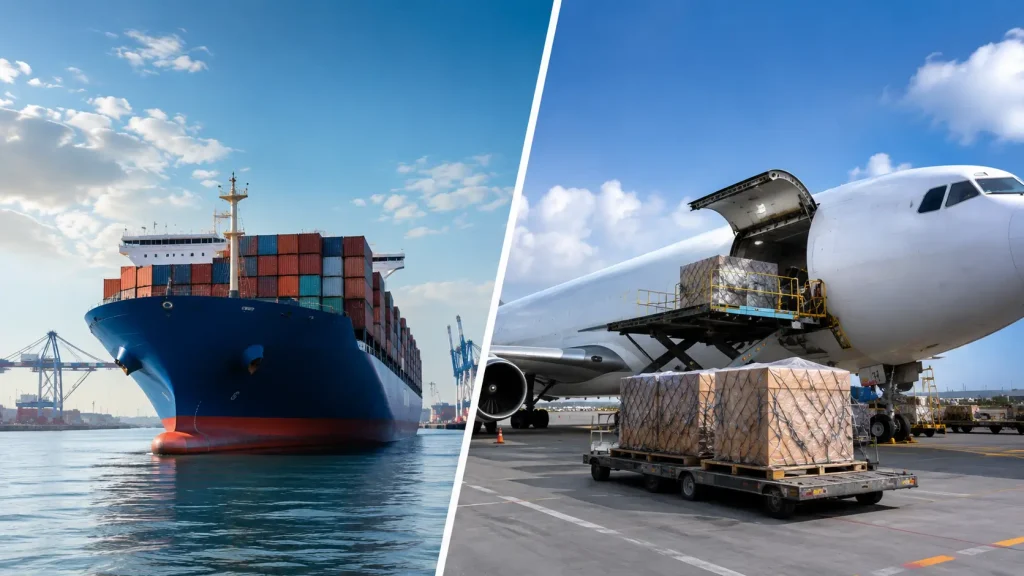
The honest answer is — it depends. Sea freight is usually cheaper, but air freight can actually save you money in situations you might not expect. In this guide, we’ll break down the real cost differences, delivery timelines, and which option makes sense for your specific shipment.
The Quick Answer
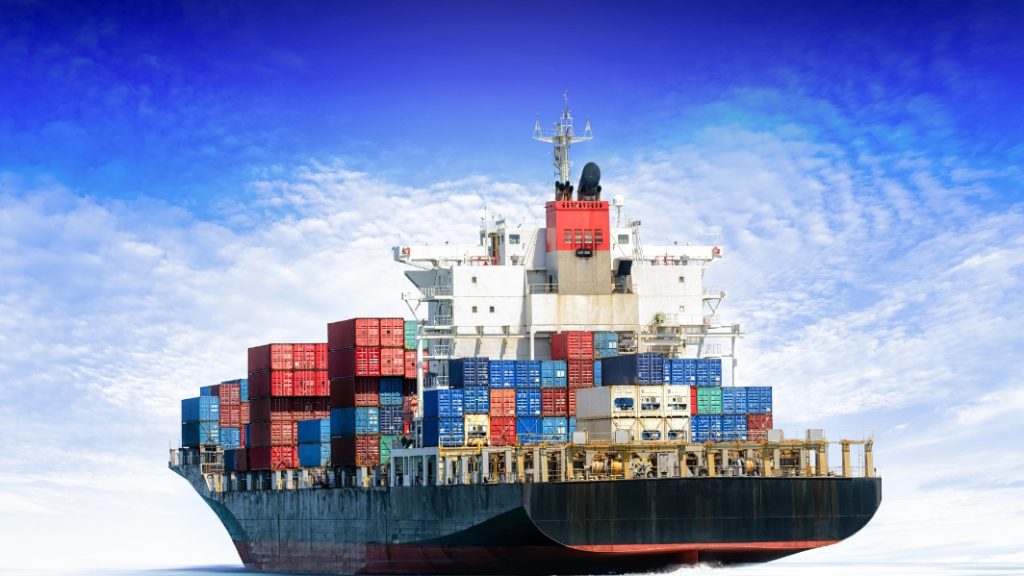
Sea freight is cheaper for large, heavy, or non-urgent shipments. Think barrels, containers, furniture, vehicles, or bulk business inventory. You pay less per kilogram, but you wait longer — typically 4 to 8 weeks depending on the route and port congestion.
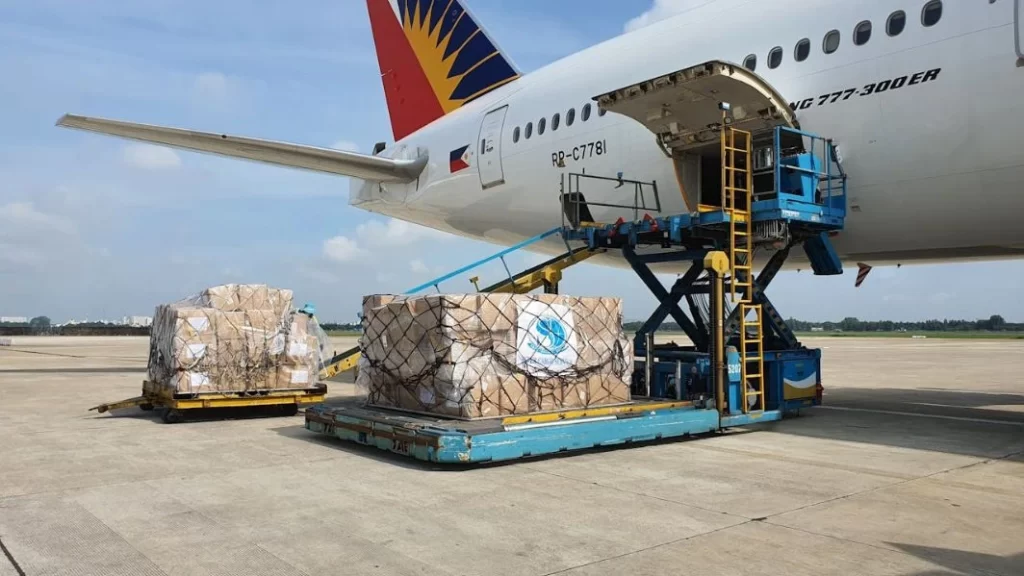
Air freight is cheaper (and smarter) for small, urgent, or high-value shipments. Documents, electronics, samples, spare parts, or anything time-sensitive. You pay more per kilogram, but the shipment arrives in days, not weeks — and you avoid costs that come with delays.
The real comparison isn’t just “price per kilogram.” It’s total cost, including storage, customs delays, insurance, and how badly you need the goods on time.
Sea Freight to Ghana: What It Actually Costs
Sea freight is priced by volume (cubic meters) or by container, which makes it the go-to option for:
- Diaspora shipments (barrels, personal effects, household goods)
- Bulk SME imports and exports
- Vehicles and machinery
- Non-perishable business inventory
Why it’s cheaper: Ships carry massive volumes at once, so the cost per item drops significantly compared to air cargo. If you’re shipping a full barrel or container-load, sea freight is almost always the more economical choice.
The trade-off: Transit times to Ghana typically range from 4–8 weeks depending on the origin port, shipping line, and how busy the destination port is. You also need to factor in customs clearance time once the shipment lands — this can add days or weeks if documentation isn’t in order.
For businesses and individuals who plan ahead, sea freight offers the best value. Postkodes’ sea freight services handle everything from booking and documentation to customs clearance and door-to-door delivery, so you’re not left chasing updates or navigating port paperwork alone.
Air Freight to Ghana: What It Actually Costs
Air freight is priced by weight (and sometimes volumetric weight), which makes it a different calculation entirely. It suits:
- Urgent business shipments
- High-value or fragile goods
- Documents and small parcels
- Perishable items
- Low-volume, time-sensitive personal shipments
Why it can still be the cheaper option: This is where people get surprised. If a delay in sea freight would cost you more than the price difference — a missed business deadline, a spoiled shipment, storage fees piling up, or a customer waiting on stock — air freight often works out cheaper overall, even though the shipping rate itself is higher.
The trade-off: You’re paying a premium for speed. Air freight to Ghana typically takes 3–7 days door-to-door, compared to weeks by sea.
For SMEs managing tight inventory cycles or individuals who simply can’t wait, Postkodes’ air freight services offer reliable, tracked delivery with full customs support — so speed doesn’t come at the cost of visibility.
Comparison
| Factor | Sea Freight | Air Freight |
|---|---|---|
| Cost per kg | Lower | Higher |
| Best for | Large, heavy, bulk shipments | Small, urgent, high-value shipments |
| Transit time to Ghana | 4–8 weeks | 3–7 days |
| Ideal use case | Barrels, containers, furniture, bulk trade goods | Documents, electronics, samples, perishables |
| Flexibility | Lower (fixed sailing schedules) | Higher (frequent flights) |
| Risk of damage/delay | Depends on port congestion | Generally lower, faster handling |
How to Actually Decide
Ask yourself three questions before booking:
- How urgent is it?
If it can wait 4–8 weeks, sea freight will almost always save you money. - How large or heavy is the shipment?
Bulk items favor sea freight; small parcels favor air freight. - What happens if it’s delayed?
If a delay costs you money, business, or spoiled goods, air freight’s higher price tag is often worth it.
Many businesses actually use both — sea freight for regular bulk restocking, and air freight for urgent top-ups or high-value items. This hybrid approach is common among SMEs importing into Ghana who want to control costs without risking stockouts.
Don’t Forget the Hidden Costs
Whichever option you choose, the sticker price isn’t the full story. Watch out for:
- Customs duties and clearance fees — these apply regardless of shipping method
- Storage/demurrage fees — charged if goods sit at port too long, more common with sea freight
- Insurance — worth it for high-value shipments, especially by sea
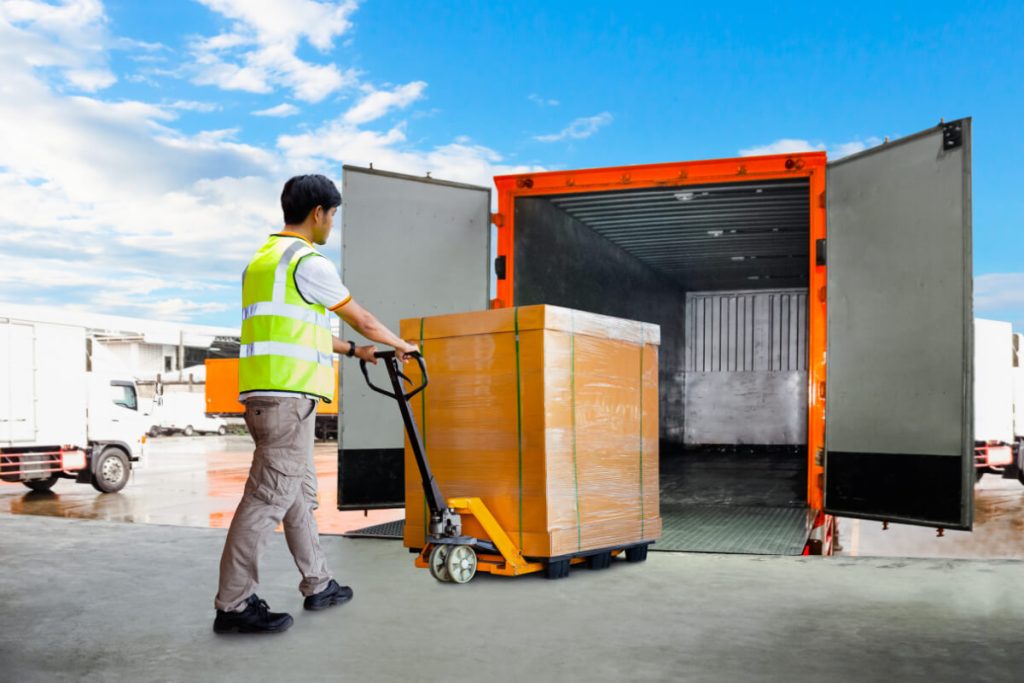
- Door-to-door vs. port-to-port — port-to-port pricing looks cheaper but leaves you to handle local delivery and clearance yourself
This is where working with a logistics partner who handles both shipping modes end-to-end makes a real difference — you get transparent pricing upfront instead of surprise fees after your shipment has already left.
Final Verdict
If price per kilogram is your only concern, sea freight wins. But the smarter question is: what’s the true cost of getting this shipment to Ghana, including time, risk, and hidden fees?
For bulk, non-urgent shipments — sea freight is the clear choice. For urgent, small, or high-value shipments — air freight often pays for itself. And for businesses shipping regularly, combining both gives you the best of cost efficiency and reliability.
Whether you need sea freight services for a bulk shipment or air freight services for something time-sensitive, Postkodes handles the booking, customs, and delivery — so you can focus on what you’re shipping, not how to get it there.
FAQs
Is sea freight always cheaper than air freight to Ghana?
Not always. It’s cheaper per kilogram for large or heavy shipments, but once you factor in delays, storage costs, and urgency, air freight can be the more cost-effective option for smaller, time-sensitive shipments.
How long does sea freight take from Australia to Ghana?
Typically 4–8 weeks, depending on the shipping line, port congestion, and customs clearance time on arrival.
Can I combine sea and air freight for the same business?
Yes. Many SMEs use sea freight for regular bulk stock and air freight for urgent restocks or high-value items, balancing cost with reliability.
Does Postkodes handle customs clearance for both sea and air shipments?
Yes, Postkodes provides full customs assistance and door-to-door delivery for both shipping methods, so you don’t have to manage clearance separately.