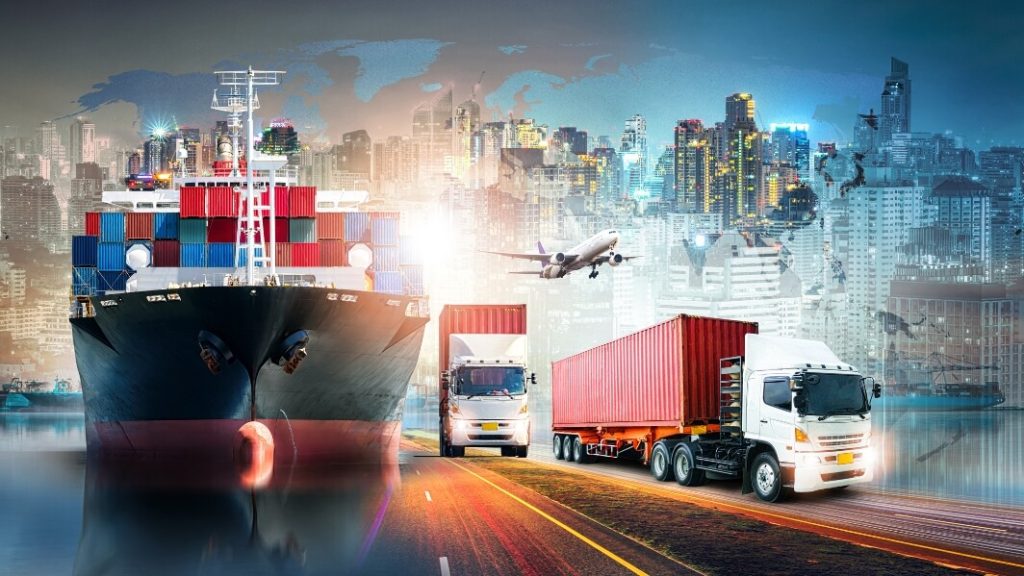
In today’s hyper-connected global economy, speed, reliability, and clarity matter more than ever. Businesses and individuals shipping goods across borders no longer want vague timelines, hidden costs, or complex logistics processes. This is where international air freight shipping stands out as the preferred solution for time-sensitive global deliveries.
At Postkodes, we believe air freight should be simple, transparent, and dependable. This guide removes the confusion around air freight and explains how it enables faster international shipping, what the process looks like, how costs are calculated, and why it remains a critical pillar of modern global trade.
Understanding International Air Freight Shipping
International air freight shipping refers to the transportation of goods by aircraft across international borders. Unlike sea or road freight, air freight focuses on speed, security, and precision. It is commonly used for urgent shipments, high-value goods, perishable items, and cargo that requires strict delivery timelines.
Air freight services operate through a global network of airlines, airports, customs authorities, and freight forwarders. When managed correctly, this network allows cargo to move seamlessly from origin to destination with minimal delays.
For businesses competing in global markets, air freight logistics is not just a shipping method—it is a strategic advantage.
Why Air Freight Is the Fastest International Shipping Option
When speed is non-negotiable, air freight is unmatched. A shipment that could take weeks by sea can often be delivered within days by air. This makes air cargo international shipping ideal for:
- Time-critical commercial goods
- Medical supplies and pharmaceuticals
- Electronics and high-value items
- Fashion and seasonal inventory
- Urgent documents and samples
Fast international shipping through air freight allows businesses to meet tight deadlines, reduce inventory holding costs, and respond quickly to market demand.
Read More: Air Freight Services in Nigeria
How Air Freight Services Work: Step-by-Step Process
Understanding the air freight shipping process helps eliminate uncertainty and improves decision-making. Below is a simplified breakdown of how international air freight shipping works.
1. Booking and Shipment Planning
The process begins with selecting the right air freight services based on cargo type, urgency, destination, and budget. Freight forwarders like Postkodes assess flight availability, routing options, and transit times.
2. Cargo Pickup and Preparation
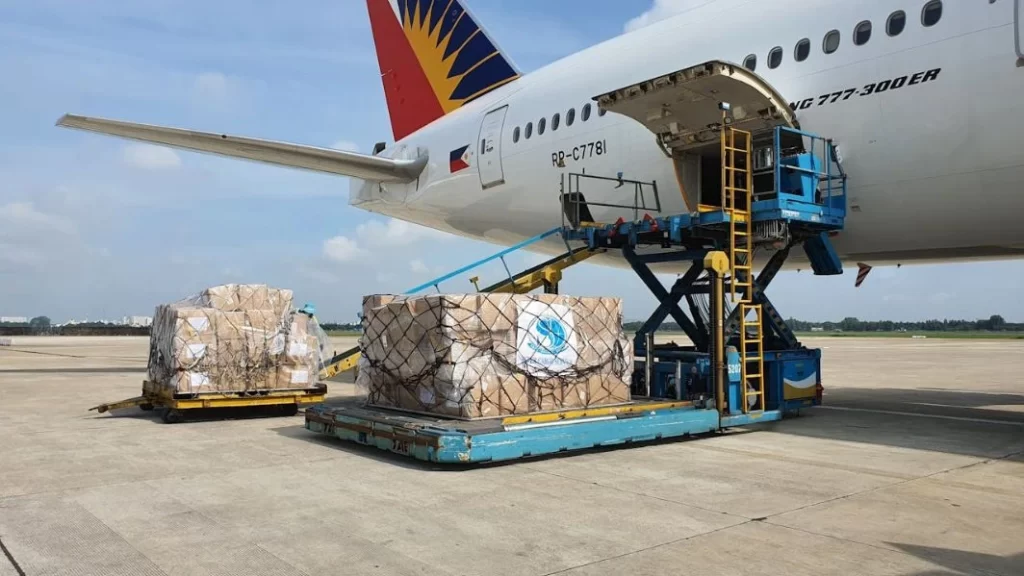
Goods are collected from the shipper’s location and prepared for air transport. Proper packaging is essential to protect cargo from handling and pressure changes during flight.
3. Documentation and Air Waybill (AWB)
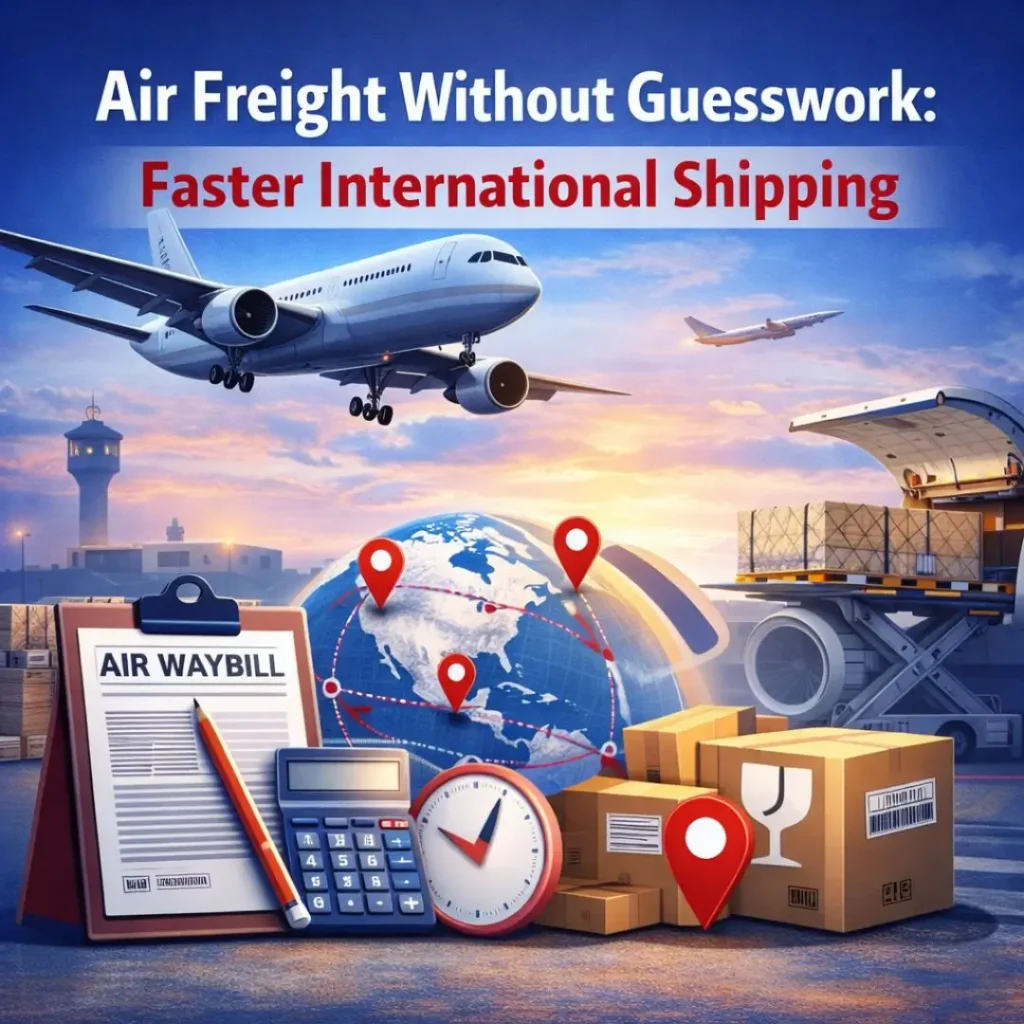
Accurate documentation is critical. The Air Waybill (AWB) acts as the shipment’s legal contract and tracking reference. Supporting documents may include commercial invoices, packing lists, and certificates of origin.
4. Customs Clearance at Origin
Before departure, shipments must clear export customs. Compliance with international regulations ensures smooth processing and avoids delays.
5. Air Transport and Transit
Cargo is loaded onto a commercial or cargo aircraft. Air freight transit time typically ranges from 1–5 days depending on route, flight availability, and customs procedures.
6. Customs Clearance at Destination
Upon arrival, shipments undergo import customs clearance. Proper documentation and compliance speed up this stage significantly.
7. Final Delivery
After clearance, goods are delivered to the consignee’s location, completing the door-to-door air freight journey.
Air Freight Transit Time: What to Expect
One of the biggest advantages of international air freight shipping is predictability. While exact transit times depend on multiple factors, air freight remains the most reliable option for fast international shipping.
Key factors influencing air freight transit time include:
- Distance between origin and destination
- Direct vs connecting flights
- Cargo type and handling requirements
- Customs clearance efficiency
- Seasonal demand and capacity
With expert planning and real-time tracking, delays can be minimized, giving shippers greater confidence in delivery schedules.
You May Also Like: Air Freight Services in Australia
Air Freight Shipping Cost: Breaking Down the Pricing
Understanding air freight shipping cost helps businesses plan logistics budgets effectively. Air freight is generally more expensive than sea freight, but the speed and reliability often justify the investment.
Main Cost Factors in Air Freight
- Chargeable weight (actual weight vs volumetric weight)
- Fuel surcharges
- Airport handling fees
- Customs clearance charges
- Destination delivery costs
While air freight shipping cost may seem higher upfront, it often reduces indirect expenses such as warehousing, inventory holding, and lost sales due to delays.
Air Freight vs Sea Freight: Choosing the Right Option
A common question in logistics planning is air freight vs sea freight. Both have their place, but the right choice depends on shipment priorities.
Air Freight Advantages
- Fastest international shipping method
- High reliability and security
- Ideal for urgent and high-value cargo
- Lower risk of damage
Sea Freight Advantages
- Lower cost for bulk shipments
- Suitable for non-urgent cargo
- Better for oversized goods
For businesses where speed, consistency, and customer satisfaction matter most, air freight services offer a clear edge.
Customs Clearance for Air Freight: Why It Matters
Customs clearance for air freight is one of the most critical stages in international shipping. Even the fastest aircraft cannot compensate for poor documentation or regulatory non-compliance.
Efficient customs clearance depends on:
- Accurate shipment documentation
- Knowledge of country-specific regulations
- Proper cargo classification
- Compliance with restricted and prohibited item rules
Experienced freight partners streamline customs procedures, reducing clearance times and avoiding costly delays.
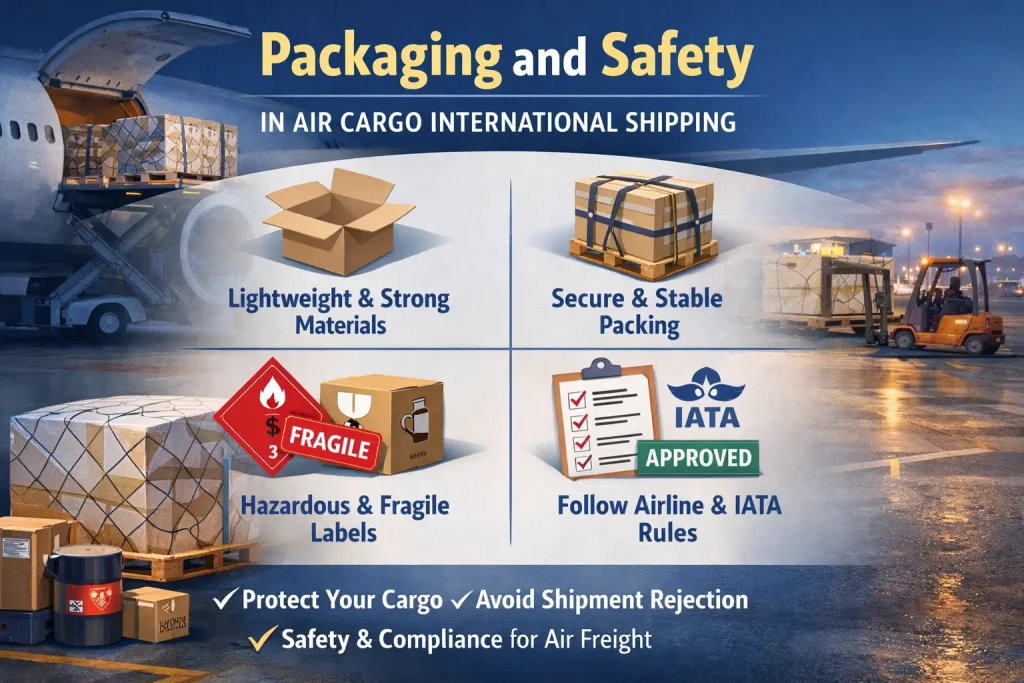
Packaging and Safety in Air Cargo International Shipping
Air freight requires specialized packaging to withstand handling, stacking, and air pressure changes. Proper packaging ensures cargo safety and compliance with airline standards.
Best practices include:
- Using lightweight but strong materials
- Securing goods to prevent movement
- Labeling hazardous or fragile items clearly
- Following airline and IATA packaging regulations
Secure packaging not only protects goods but also reduces the risk of shipment rejection.
Read More: What is Air Freight: Definition, Advantages, and Best Use Cases
Tracking and Visibility in Modern Air Freight Logistics
Modern air freight services offer real-time shipment visibility, eliminating guesswork. Tracking tools allow shippers to monitor cargo status at every stage of the journey.
Benefits of air freight tracking include:
- Improved supply chain transparency
- Faster issue resolution
- Better customer communication
- Enhanced trust and reliability
For businesses, this level of visibility is no longer optional—it is an expectation.
Industries That Rely on International Air Freight Shipping
Air freight supports a wide range of industries where speed and reliability are essential:
- Healthcare and pharmaceuticals
- Technology and electronics
- Automotive and manufacturing
- Fashion and retail
- Aerospace and engineering
In each of these sectors, air freight logistics enables uninterrupted operations and global competitiveness.
When Should You Choose Air Freight Services?
Air freight is the right choice when:
- Delivery deadlines are critical
- Goods are high-value or sensitive
- Inventory shortages must be avoided
- Market demand requires rapid response
- Reliability outweighs cost considerations
Choosing the right shipping method at the right time is key to efficient international trade.
How Postkodes Simplifies Air Freight Without Guesswork
At Postkodes, we remove complexity from international air freight shipping. Our approach focuses on clarity, speed, and reliability at every stage.
We provide:
- End-to-end air freight services
- Transparent pricing and timelines
- Expert customs clearance support
- Real-time shipment tracking
- Dedicated logistics assistance
Whether you are shipping commercial cargo or time-sensitive goods, Postkodes ensures your shipment moves faster—without confusion or delays.
The Future of Faster International Shipping by Air
As global trade continues to evolve, air freight will play an even greater role in supply chain resilience. Advancements in digital tracking, automated customs processing, and sustainable aviation are shaping the future of air freight logistics.
Businesses that invest in reliable air freight partnerships today will be better positioned to compete globally tomorrow.
Also Read: Postkodes Expands to Senegal: Strengthening Trade Across West Africa
Final Thoughts
International air freight shipping is more than just speed—it is about confidence, control, and consistency. By understanding the air freight shipping process, costs, transit times, and compliance requirements, businesses can make smarter logistics decisions.
Air freight without guesswork means choosing the right partner, the right strategy, and the right shipping method for your needs.
If you are ready to experience faster international shipping with clarity and reliability, Postkodes is here to help.
Get started today—ship smarter, ship faster, and ship without guesswork.
FAQs
1. What is international air freight shipping?
International air freight shipping is the transportation of goods by aircraft across borders. It is the fastest and most reliable option for urgent, high-value, or time-sensitive cargo.
2. Why should I choose air freight over sea freight?
Air freight offers significantly faster transit times, higher security, and better reliability compared to sea freight, making it ideal for urgent international shipping needs.
3. How long does international air freight shipping take?
Air freight transit time typically ranges from 1 to 5 days, depending on the destination, flight availability, and customs clearance procedures.
4. What affects air freight shipping cost?
Air freight rate depends on chargeable weight, fuel surcharges, destination, cargo type, and customs clearance requirements. Faster delivery often offsets higher upfront costs.
5. Does Postkodes handle customs clearance for air freight?
Yes. Postkodes provides complete customs clearance support, ensuring accurate documentation, regulatory compliance, and faster release of international air cargo.
6. Is air freight suitable for business and commercial shipments?
Absolutely. Businesses rely on air freight services for fast international shipping, inventory replenishment, urgent orders, and maintaining smooth global supply chains.