
A customs broker handles customs procedures, including import declarations, duties, taxes and regulatory compliance. A freight forwarder arranges the movement of goods from the sender to the receiver, including transport, cargo handling and shipping documents. You may need both when shipping internationally, as they handle different parts of the same shipment.
What is the difference between a customs broker and a freight forwarder?
The main difference is their responsibility. A customs broker focuses on getting goods through customs legally, while a freight forwarder organises how those goods travel between countries.
For example, imagine you’re sending a container of household goods from Sydney, Australia, to Lagos, Nigeria.
Your freight forwarder arranges the collection, container booking, vessel transport and delivery arrangements. Your customs broker handles the import declaration, checks the customs documents, calculates applicable duties and helps secure customs release.
Here is a simple comparison:
| Responsibility | Customs broker | Freight forwarder |
|---|---|---|
| Customs declarations | Main responsibility | May coordinate |
| Import duties and taxes | Advises and processes payments | May arrange payment coordination |
| Shipping bookings | Not usually responsible | Main responsibility |
| Sea and air freight | Not usually responsible | Main responsibility |
| Bill of lading | Reviews relevant details | Coordinates shipping documentation |
| Customs inspections | Coordinates customs compliance | Coordinates cargo arrangements |
| Cargo collection and delivery | Not usually responsible | Arranges transport |
| Shipment tracking | May provide customs status | Tracks the transport movement |
The two services can overlap. Some freight forwarding companies also provide customs brokerage through licensed professionals or local customs agents.
However, arranging transport does not automatically mean a company is authorised to perform every customs activity.
What does a customs broker do?
A customs broker helps importers and exporters meet customs requirements so goods can legally enter or leave a country.
Customs authorities need accurate information about the goods, their value, origin, classification and intended use. A customs broker helps prepare and submit the required information.
What are the main responsibilities of a customs broker?
A customs broker generally handles the following tasks:
- Customs declarations: Prepares and submits the required import or export declarations.
- Product classification: Identifies the correct Harmonized System (HS) code for the goods.
- Duty and tax calculations: Helps determine the applicable import duties, taxes and other charges.
- Document checking: Reviews commercial invoices, packing lists, permits and other supporting paperwork.
- Regulatory compliance: Checks whether the shipment needs special licences, certificates or approvals.
- Customs inspections: Coordinates responses when customs authorities select goods for examination.
- Customs release: Follows the clearance process and communicates when goods are released.
For example, if you’re importing electronics into Nigeria, your customs broker needs accurate product descriptions, quantities, values and classification details.
If the declared information does not match the actual cargo, customs may request additional documents, reassess the shipment or hold it for inspection.
Does a customs broker pay import duties for you?
A customs broker can calculate the expected duties and taxes and arrange payment according to the agreement with the importer.
However, the importer remains responsible for ensuring the correct duties and taxes are paid. Hiring a broker does not remove your legal responsibilities as the owner or importer of the goods.
You should also ask whether the broker’s quotation includes customs service fees, government charges or only the professional clearance service.
What does a freight forwarder do?
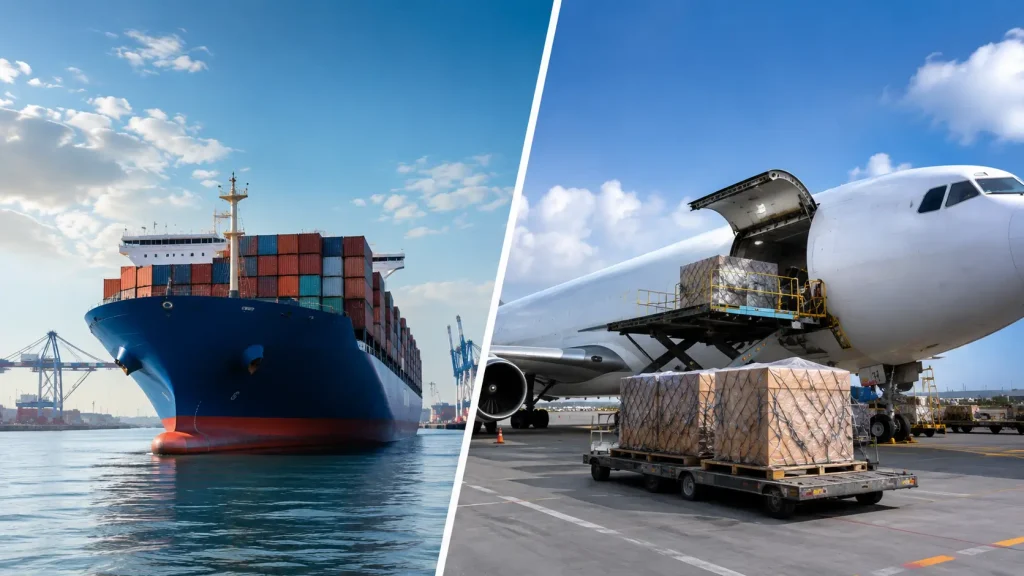
A freight forwarder arranges the transportation of goods from their origin to their destination. This can involve sea freight, air freight, road transport or a combination of different transport methods.
According to FIATA, freight forwarding includes transport coordination, cargo handling, storage, consolidation, distribution and related advisory services.
A freight forwarder acts as the coordinator between the shipper, carriers, warehouses, customs agents and other logistics providers.
What are the main responsibilities of a freight forwarder?
A freight forwarder usually handles:
- Transport planning: Selects suitable shipping routes and transport methods.
- Carrier booking: Arranges space with shipping lines, airlines or road transport companies.
- Cargo collection: Organises pickup from the supplier, warehouse or sender.
- Cargo consolidation: Combines smaller shipments into shared container space when appropriate.
- Shipping documentation: Coordinates documents such as the bill of lading or air waybill.
- Cargo handling: Arranges loading, unloading and transfers between transport providers.
- Shipment tracking: Provides updates about cargo movement and estimated arrival.
- Final delivery: Organises transport from the destination port or airport to the receiver.
For example, if you’re sending several barrels from Australia to Nigeria, a freight forwarder can arrange collection, packing checks, container consolidation, sea transport and delivery arrangements.
The forwarder may also work with a licensed Nigerian customs agent to handle the destination clearance.
Does a freight forwarder own the ships or aircraft?
No. Most freight forwarders do not own the ships or aircraft used for international transportation.
They arrange cargo space with shipping lines, airlines and other transport providers. Some larger logistics companies operate their own warehouses, vehicles or other transport assets, but this is not a requirement for freight forwarding.
When do you need a customs broker, a freight forwarder or both?
Your requirements depend on what you’re shipping, where it’s going and how much support you need.
A customs broker is useful when you need professional help with customs declarations, import duties, permits and regulatory requirements.
A freight forwarder is useful when you need someone to arrange the movement of goods between locations.
You may need both when your shipment involves international transport and customs clearance.
| Your shipping requirement | Service you need | Reason |
|---|---|---|
| Clearing imported commercial goods | Customs broker | Handles customs declarations and compliance |
| Sending cargo internationally | Freight forwarder | Arranges transport and shipping |
| Importing a full container | Both | Transport and customs clearance |
| Sending consolidated barrels overseas | Freight forwarder and destination customs agent where required | Coordinates shared cargo and destination formalities |
| Importing regulated products | Both, where applicable | Transport arrangements and specialist customs compliance |
| Moving urgent international cargo | Freight forwarder and customs broker where required | Coordinates faster transport and clearance |
For a small shipment, one logistics provider may coordinate both services. Before booking, ask whether customs clearance is included or handled by a separate agent.
How long does international shipping and customs clearance take?
International shipping time depends on the origin, destination, transport method, carrier schedule and customs procedures. Sea freight usually takes longer than air freight, but it is often more economical for larger shipments.
As a practical example, consider shipping cargo from Australia to Nigeria.
How long does sea freight take from Australia to Nigeria?
Sea freight from Australia to Nigeria can take approximately 7 to 11 weeks as a planning estimate, depending on the departure port, shipping route, transshipment arrangements and destination terminal.
Globy Logistics’ retrieved CMA CGM listings show selected services taking approximately 49 to 79 days from Australian ports to Apapa and Tin Can Island.
For example:
- Sydney to Apapa: Selected listings show approximately 52 days.
- Sydney to Tin Can Island: A selected listing shows approximately 76 days.
- Melbourne to Apapa: A selected listing shows approximately 60 days.
- Melbourne to Tin Can Island: A selected listing shows approximately 79 days.
These are indicative schedules, not guaranteed delivery dates.
Fremantle departures need a separate carrier quotation because the available route data does not confirm a dependable transit-time range for that specific route.
If you’re sending barrels, household goods or commercial cargo, remember that the full delivery time includes more than the vessel journey. Collection, export handling, consolidation, transshipment, port arrival and customs clearance can add time.
How long does air freight take from Australia to Nigeria?
Air freight is generally much faster than sea freight. A reasonable initial planning estimate is around 4 to 14 business days, depending on whether you select express or standard service.
PACK & SEND Australia publishes estimates of 4 to 8 business days for express services and 8 to 14 business days for standard air freight to Nigeria.
CargoRouter estimates approximately 7 days for a Sydney-to-Lagos air freight route, including handling and terminal operations.
Actual delivery can take longer if cargo requires additional screening, customs checks or onward road transport.
How long does customs clearance take in Nigeria?
Customs clearance time depends on the shipment documents, inspection requirements, cargo type and coordination between government agencies.
The Nigeria Customs Service’s 2026 Time Release Study for Tin Can Island Port provides useful evidence. For 98.7% of the 601 consignments studied, the average time from examination booking to physical port exit was approximately 3 days, 14 hours and 34 minutes.
However, the study also identified a small group of consignments that took more than two months to clear.
This shows why you should not assume every shipment will be released within a fixed number of days.
A customs broker or licensed clearing agent can help reduce avoidable delays by preparing accurate declarations and responding to customs requests.
What factors affect shipping and customs clearance time?
The same shipment route can have different delivery times because several operational factors affect cargo movement.
1. Incomplete shipping documents
Missing or incorrect documents can delay customs declarations and cargo release.
Common documents include:
- Commercial invoice
- Packing list
- Bill of lading or air waybill
- Certificate of origin, where required
- Import permits and product-specific certificates, where applicable
Check that product descriptions, quantities, values and consignee details match across the documents.
2. Port congestion
Port congestion can affect vessel berthing, container discharge, terminal handling and cargo collection.
At Lagos ports, delays can also arise from waiting periods between inspections, terminal operations and truck dispatch.
The Nigeria Customs Service’s 2026 Time Release Study identified idle waiting time and fragmented inspection scheduling as major contributors to delays at Tin Can Island.
3. Customs inspections
Customs authorities may select shipments for document checks, physical examinations or scanning.
If the declared goods do not match the cargo, officials may request additional information or conduct further checks.
4. Peak shipping periods and public holidays
Shipping schedules can become less predictable during busy trading periods, including the months before major holidays.
Public holidays in the departure and destination countries can also affect warehouse operations, customs processing, trucking and delivery appointments.
If your cargo is needed for a particular holiday, allow extra time rather than planning around the earliest advertised arrival date.
5. Transshipment and carrier schedules
Some Australia-to-Nigeria shipments use connecting ports instead of a single direct vessel service.
If a connecting vessel is delayed or a scheduled connection is missed, your cargo may need to wait for the next available sailing.
This is one reason to ask your freight forwarder whether the quoted transit time includes transshipment and destination handling.
How does the shipping process work from booking to delivery?
International shipping involves several steps. Your freight forwarder and customs broker handle different parts of the process.
- Request a shipping quote: Provide the origin, destination, cargo description, weight, dimensions and preferred shipping method.
- Prepare the cargo: Pack the goods properly and prepare the commercial invoice and packing list where required.
- Arrange cargo collection: The freight forwarder organises collection and transport to the warehouse, airport or seaport.
- Complete export formalities: Required export declarations and checks are completed before departure.
- Book international transport: The forwarder arranges space with the shipping line or airline.
- Monitor the shipment: The forwarder provides updates while the cargo travels.
- Complete destination customs clearance: A licensed customs broker or clearing agent submits the required declarations and coordinates duties, taxes and inspections.
- Arrange final delivery: Once released, the cargo is collected and transported to the receiver.
The main point is that freight forwarding and customs brokerage work together. The freight forwarder coordinates the journey, while the customs broker handles the customs requirements.
How much does a customs broker and freight forwarder cost?
There is no single fixed price because both services depend on cargo details, destination requirements and the work involved.
A freight forwarder’s quotation may include international freight, origin handling, documentation, consolidation, terminal charges and destination delivery.
A customs broker generally charges for customs-related services, although some providers combine these fees with other logistics charges.
For an idea of the Australia-to-Nigeria sea freight market, retrieved Globy listings show indicative 20-foot container rates of approximately USD 2,038 to USD 2,325 for selected Australian-to-Nigeria routes.
These are examples of listed ocean freight rates, not a complete door-to-door quotation. They may exclude customs duties, taxes, insurance, local terminal charges, storage, delivery and other fees.
What affects the total shipping cost?
The main cost factors include:
- Cargo weight and dimensions
- Container size or shared container space
- Sea freight or air freight selection
- Origin and destination locations
- Customs duties and applicable taxes
- Port handling and documentation fees
- Cargo insurance
- Storage, demurrage and detention charges
- Final-mile transportation
Ask for an itemised quotation so you can understand which charges are included and which may be payable later.
What common mistakes cause customs and shipping delays?
Many shipping delays begin before the cargo reaches the port. A small documentation error can create additional checks, charges and waiting time.
Avoid these common mistakes:
- Declaring incorrect cargo values.
- Using inaccurate product descriptions or HS codes.
- Providing different quantities on the invoice and packing list.
- Forgetting required import permits or certificates.
- Booking cargo without checking prohibited or restricted goods.
- Failing to arrange customs clearance before the vessel arrives.
- Ignoring destination port charges and cargo collection deadlines.
- Assuming the freight forwarder’s quotation automatically includes customs duties.
For commercial imports, confirm the applicable import requirements before dispatch. For personal cargo, provide an accurate description of the contents rather than using a general description such as “personal items” for everything.
How can you track your international shipment?
You can track an international shipment using its tracking number, bill of lading number or air waybill number, depending on the transport service.
Your freight forwarder should provide tracking information or updates from the carrier.
Typical shipment statuses include:
- Booking confirmed: Transport space has been arranged.
- Cargo received: The shipment has reached the warehouse or carrier.
- Departed: The vessel or aircraft has left the origin.
- In transit: Cargo is travelling or transferring between locations.
- Arrived at destination: Cargo has reached the destination port or airport.
- Customs clearance: The shipment is undergoing customs procedures.
- Released: Customs has authorised the cargo to leave customs control.
- Out for delivery: The cargo is being transported to the receiver.
- Delivered: The shipment has reached its destination.
Remember that freight tracking and customs tracking are not always the same. A carrier may show that a container has arrived, while the customs process is still pending.
You can use the Postkodes shipment tracking service to check available shipment updates.
If a tracking status does not change for several days, contact your logistics provider and ask whether the cargo is waiting for a vessel connection, customs inspection, document approval or collection.
Frequently asked questions
1. Can a freight forwarder also act as a customs broker?
Yes, some freight forwarding companies offer customs brokerage through their own licensed customs professionals or partner agents. However, freight forwarding and customs brokerage are separate responsibilities. Always confirm that the provider is authorised to handle customs declarations in the destination country.
2. Do I need a customs broker when importing goods into Nigeria?
You may need a licensed customs agent to handle customs clearance on your behalf, depending on your shipment and the applicable procedures. The Nigeria Customs Service recognises licensed customs representatives. Ask your freight forwarder to confirm who will handle the destination clearance.
3. Who is responsible for customs duties, the broker or the importer?
The importer is generally responsible for applicable customs duties and taxes. A customs broker can calculate the charges, prepare declarations and arrange payment under the agreed terms. However, the importer should verify the amounts and ensure that all required payments are completed.
4. Is a freight forwarder cheaper than a customs broker?
They provide different services, so comparing their fees directly is not useful. A freight forwarder charges for arranging cargo transportation and related logistics, while a customs broker charges for customs-related work. You should compare the complete service costs rather than just one fee.
5. How long does it take to clear customs in Nigeria?
There is no guaranteed clearance time. The Nigeria Customs Service’s 2026 Tin Can Island study reported approximately 3 days and 14 hours for 98.7% of the studied consignments between examination booking and port exit. Documentation errors, inspections and operational delays can extend this period.
6. Can I track my shipment without contacting my freight forwarder?
Yes, if your logistics provider or carrier provides an online tracking service. You may be able to use a tracking number, bill of lading or air waybill. However, some customs updates and local delivery information may only be available directly from your freight forwarder or clearing agent.
What should you choose for your next shipment?
A customs broker and a freight forwarder have different responsibilities, but both contribute to successful international shipping.
If you need help with customs declarations, import duties and regulatory requirements, use a qualified customs broker. If you need cargo collection, transport bookings, shipment coordination and delivery, use a freight forwarder.
For international shipments involving several countries or transport stages, working with a logistics provider that can coordinate both services can make communication easier and reduce avoidable delays.
Postkodes provides international parcel tracking and shipping-related logistics services, helping individuals and businesses manage shipments across international routes. Its services include shipment tracking, shipping calculations and logistics support for cross-border cargo movements.
Before arranging your next shipment, use the Postkodes shipping calculator to explore shipping costs and plan your cargo movement.